


Key lessons learned
- Financial analysis software allows for the collection and processing of data, which facilitates financial analysis, trend visualization, and budget planning.
- There is no one-size-fits-all solution, so it is important to choose a tool that meets the specific needs of your business.
- This type of software is widely used by finance teams and decision-makers to improve and accelerate decision-making.
- Pay particular attention to platforms that offer real-time data processing, forecasting, budgeting tools, and AI integration.
I have dedicated over 15 years of my life to fintech, following trends and advising business leaders, investors, and banking executives. This year alone, several of my clients have asked me the same questions: how to identify risks earlier, understand why cash flow gaps continue to occur, and make strategic planning more predictable?
And they’re not alone. A 2024 Gartner survey revealed that 59% of accountants make multiple errors every month. This shows how easily manual reporting can lead to flawed decisions. Convenience matters, but in finance, accuracy and control always prevail.
Automating financial processes will be relatively simple by 2026. But to do so, there are a few points to be aware of:
- What is financial analysis software?
- What are the most important characteristics?
- What options are currently available on the market and what are their differences?
In this article, I will help you answer these questions and choose the solution that best suits you, your business, or your needs.
What is financial analysis software?
Logiciel d’analyse financièreest un outil qui aide les entreprises et les particuliers àcollect and process data, automate reports, and forecast future performance. You get near-instant financial analysis that would otherwise take weeks or even months. Furthermore, it helps contrôler les performances, gérer les budgets, visualiser les données et automatiser la plupart des flux de travail that would otherwise be time-consuming and labor-intensive for both teams and individuals.
How do companies use financial analysis software?
Financial analysis software is not just for business owners. Accountants, financial directors, financial analysts, auditors, and other finance professionals use it to eliminate manual and tedious tasks and focus on more important matters.
Imagine how much easier things could be if you streamlined just a few of these areas:
- Report writing and repetitive tasks
- Performance indicator monitoring
- Planning and budgeting
- Revenue and expenditure forecasting
- Cash flow management
- Cost control
Key features to look for in financial analysis software
The functionalities of this software can vary, ranging from a broad range to highly specialized features. Overall, for those working with financial data, several key characteristics prove essential:
Financial information
Financial reports are essential for any fintech company, but preparing them often requires significant time and effort. Financial software can automate most of these tasks, including generating balance sheets, profit and loss statements, and cash flow reports.
Visibilité financière en temps réel
This invaluable feature allows businesses to combine financial data from various sources, giving them a comprehensive view of what’s happening within their organization. Direct integrations with CRM, ERP, and accounting platforms improve data accuracy and consistency, and enable information to be kept up-to-date.
Flexibilité et personnalisation
Technology is evolving rapidly, and businesses need tools that can adapt to changing needs. That’s why financial analysis software must be flexible enough to meet your specific requirements. It must scale with the company’s growth and allow teams to customize the modeling logic for unique transactions, if necessary.
Forecasts and budget
Logiciel d’analyse financièredevraitinclude features for creating detailed budgets and accurate financial forecasts. Manual spreadsheets are increasingly being replaced by automated solutions that help businesses react more quickly to changing market conditions. With thesefinancial analysis tools, companies can develop forward-looking financial plans and prepare for different market scenarios.
Data visualisation
If visualization is important to you, you should also pay attention to this feature. Personally, I preferlogiciel d’analyse financièrethat comes with visualization tools, as graphical data is easier for most people to understand, allowing them to spot trends and recurring patterns.
The 10 best financial analysis software programs in2026
When selecting these tools, I focused on practical impact: their ability to handle forecasting and scenario planning, their ease of integration into existing systems, the reliability of their reports, and the real reduction of manual work and errors.
Let’s now look at those I consider to be the best for fintech in Europe.2026 .
Cube
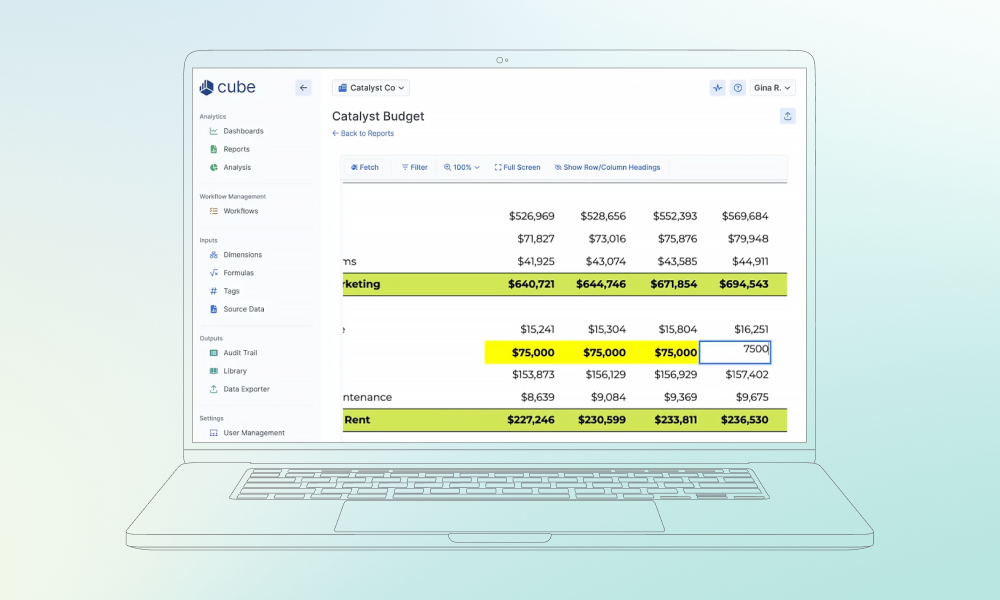
As a fintech expert, I’ve tried many FP&A tools and found they weren’t always effective.Cubeis definitely worth considering. It’slogiciel d’analyse financièrethat works directly within familiar spreadsheets like Excel and Google Sheets, making it easier to automate routine tasks and reduce errors without disrupting the existing workflows of finance teams.
I’ve noticed that Cube simplifies data consolidation, reporting, and variance analysis, saving teams valuable time. Centralized storage of data and models also ensures consistency and accessibility of financial data across the organization.
One feature I found particularly interesting to highlight is thebuilt-in agentic AI. It provides instant answers, makes predictions, explains discrepancies, and connects data across different systems. You can interact with the AI analyst directly in Slack, Teams, or the Cube workspace, which helps maintain an efficient workflow.
Mon verdict
Cube strikes a good balance between automating routine tasks, implementing AI, and preserving the workflows teams are used to. It’s ideal for finance teams using Excel or Google Sheets who want to simplify forecasting, budgeting, and reporting. However, it might not be the best solution for very small startups with limited budgets or for large enterprises with complex, multi-entity financial and administrative management needs.
Oracle Essbase
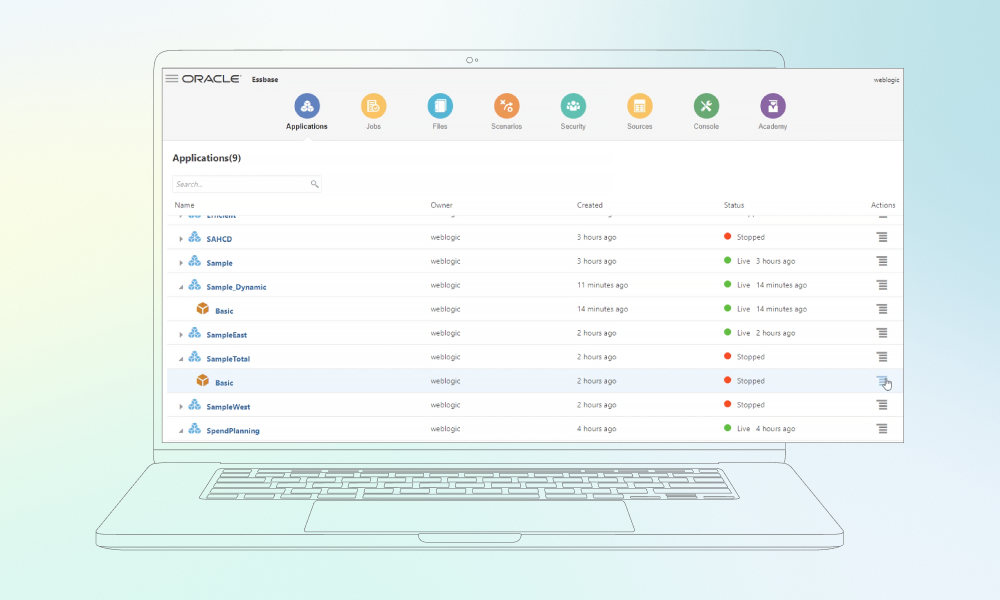
Oracle Essbase is a solid choice for handling large, complex datasets. The platform is designed for detailed analysis and reporting when your financial or operational data comes from multiple sources. One thing I find particularly useful is its integrationavec d’autres outils Oracle BI,as well as Smart View, which allows users to create reports, pivot tables, and charts directly in Excel. This means teams can work on spreadsheets while simultaneously building models to simulate different business scenarios.
Key features include hypothesis analysis for modeling different outcomes, sandbox and workflow management for approvals, and automation via REST API, Java API, MaxL, or the API. Un autre avantage est que you don’t need to abandon Excel: Smart View and Cube Designer allow you to continue working as usual, with Essbase handling the analysis in the background.
Mon verdict
Oracle Essbase is a powerful platform, but it’s not the easiest tool to use. Configuration can be tricky, patches can be time-consuming, and some calculations require technical expertise. It’s best suited for finance and analytics teams that need to work with complex data from multiple systems. For smaller teams or startups looking for a more user-friendly tool, other options might be preferable.
QuickBooks
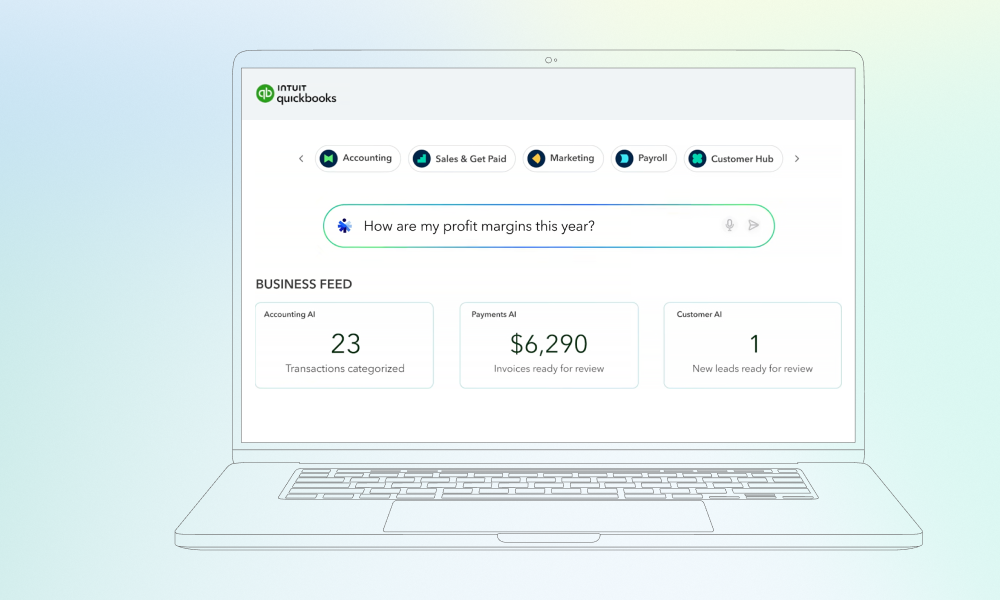
QuickBooks is a bit different from the other options presented here, as it’s primarily accounting software. However, it includes basic features such as invoicing, expense tracking, and financial reporting. It also helps teams manage cash flow and keep an eye on overall financial performance. I’d even say that Quick Books is one of the most user-friendly options for small and medium-sized businesses in Europe.2026 .
It is available in both online and desktop versions and connects to payment processors, e-commerce platforms, and other applications. This flexibility makes it useful not only for day-to-day accounting but also for cash flow planning and project expense tracking.
When I used Quick Books, I found it quite easy to track hours, billable work, and project costs, as well as run profit and loss statements and balance sheets. I should point out that some features, particularly advanced integrations, require higher-tier plans, although the platform remains easy to adopt. What I like most about Quick Books is that it gets the job done without overcomplicating things.
Mon verdict
The platform is ideal for small teams or growing businesses that need robust accounting and cash management in an easy-to-use system. It’s not designed for large, multi-entity organizations with complex accounting and management needs, but for its target audience, it remains a reliable and flexible option.
NetSuite
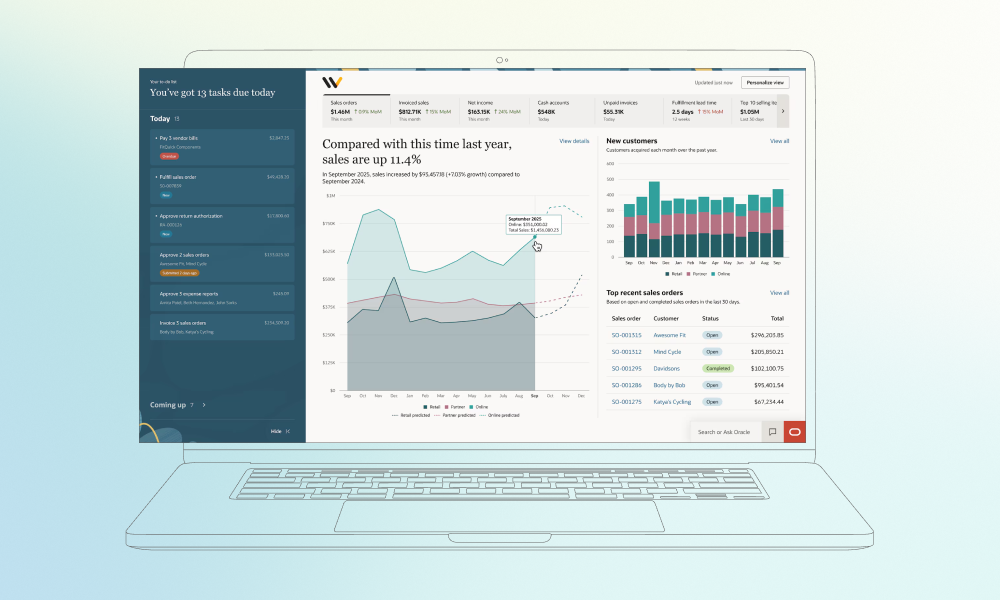
Net Suiteis a cloud-based ERP that goes beyond accounting, with features for CRM, inventory, e-commerce, and other modules. What I appreciated most was that it brings all these functions together in one place, while giving teams real-time visibility into cash flow, orders, and project performance.
Integrated business intelligence also caught my attention, as it made forecasting and scenario planning easier than expected. You can track supply chains, manufacturing, and payroll all in one place, and quickly get the reports you need without having to sift through spreadsheets. Net Suite scales with your business and allows you to manage different departments and locations. This makes it much easier to work with international teams and manage larger organizations.
Of course, there are drawbacks. System configuration and customization are not always straightforward and can be time-consuming, and advanced reporting may require third-party tools.
Mon verdict
NetSuite is a powerful and versatile platform, ideal for medium and large businesses that need a single platform for finance, operations, and reporting. For small teams or businesses, NetSuite may prove more complex and expensive than necessary.
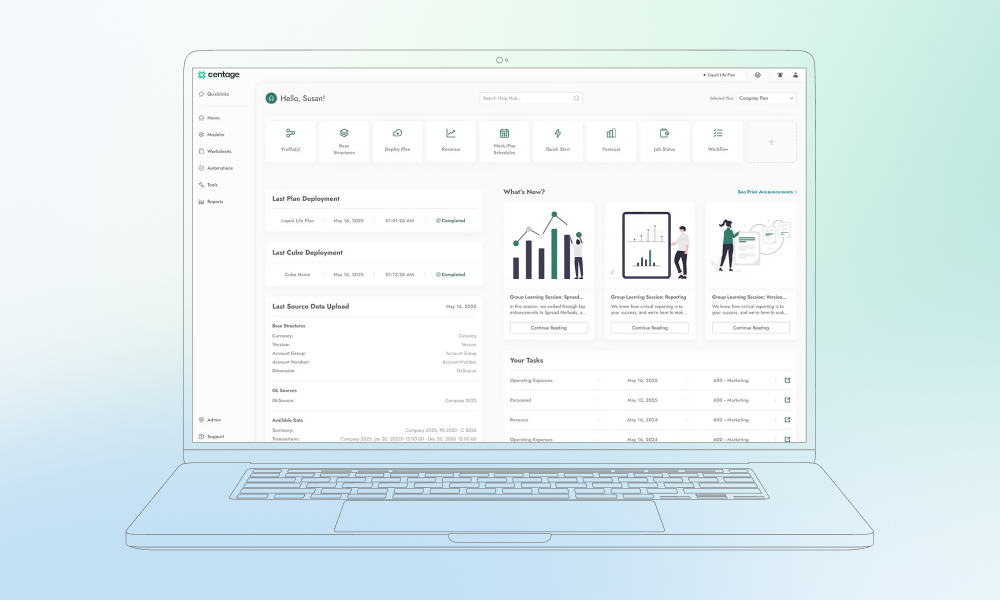
Percentage Planning Maestro
Centage Planning Maestrois a budgeting and forecasting tool designed to support financial management. One of my clients used it for several months, and during our review of the software, we both appreciated how it ensures the synchronization of balance sheets and cash flows, as well as the consistency of the chart of accounts across the entire company.
I found the rolling forecasts very practical: they update automatically when headcount or payroll changes. I also appreciate software that supports scenario planning, as it helps teams explore how different situations might unfold. Consolidated reporting is another useful feature that allows users to view the profit and loss statements and balance sheets of each entity in one place.
On the other hand, updates can take time to appear in the system and some features may seem slower than with Excel.
Mon verdict
Centage is ideal for small and medium-sized businesses that need detailed budgeting and forecasting based on production factors, without excessive complexity. It might seem a bit slow for teams that need to move quickly or for companies accustomed to working primarily with Excel.
Jedox
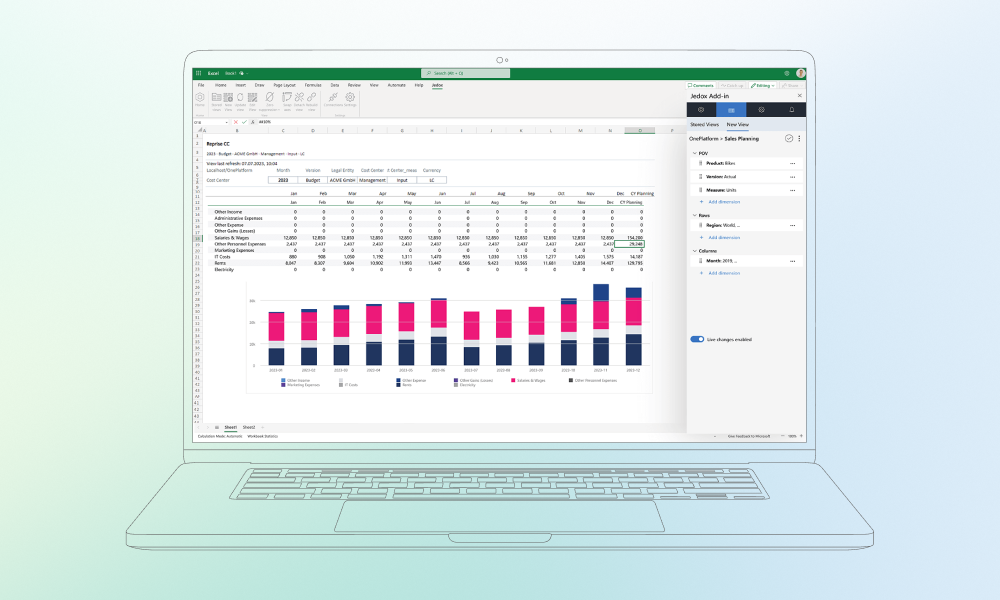
Jedox is another major player in performance management, focusing on budgeting, planning, and forecasting. It allows teams to model complex scenarios, link key operational and financial performance indicators, and gain a clear picture of their business without losing sight of the details.
During testing, I found scenario planning, driver-based planning, and rolling forecasts particularly practical and easy to use. It also includes integrated activity planning, which facilitates results testing and coordination between teams. Furthermore, it supports ESG reporting and financial consolidation, providing a unified view of performance.
In other words, JedoxAI transforms data into actionable insights, enables more reliable forecasting, and accelerates decision-making. You can build models, define business rules, and perform ad hoc analyses using drag-and-drop dashboards or natural language queries.
For small teams or people used to working primarily with Excel, Jedox may seem too complex at first, as there are many things to configure, including templates, scenarios, and rules. There’s also a learning curve to the interface.
Mon verdict
Jedox is the ideal solution for medium and large enterprises with complex FP&A needs that require flexible modeling, integrated planning, and AI expertise. Smaller teams may want to consider other, faster-to-implement solutions.
Anaplan
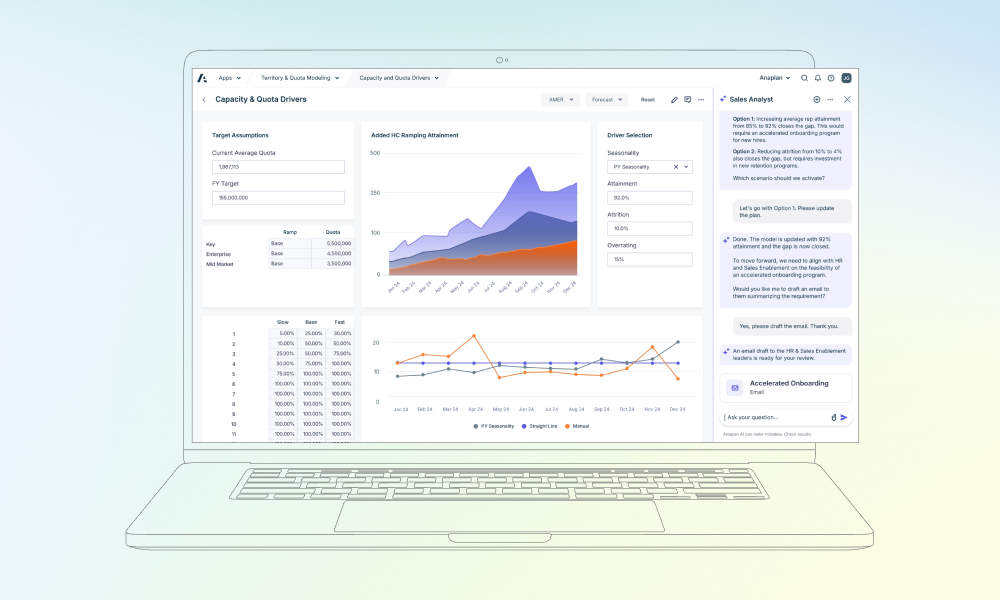
For teams responsible for cross-functional planning,Anaplan can be a game-changer, making it easier to develop and test complex scenarios than with spreadsheets alone. The platform allows teams to connect data from finance, sales, human resources, and supply chain, build detailed models, and gain a clearer view of your business. It also handles simulation scenarios and complex planning, so you can see how changes in one area impact the rest of the business.
Anaplan enables real-time collaboration, allowing multiple users to work simultaneously on the same plans. Data management tools ensure accurate and accessible figures, while the integrated workflow and version control facilitate organization.
The downside is that there’s a lot to learn if you’re not familiar with its modeling system. Furthermore, producing highly detailed reports can be challenging due to workspace limitations.
Mon verdict
Anaplan is ideal for medium to large teams that need to plan across multiple departments and coordinate their efforts in one place. It’s especially useful if you want to test different scenarios, keep plans connected, and collaborate with teams in real time.
Sage Intacct
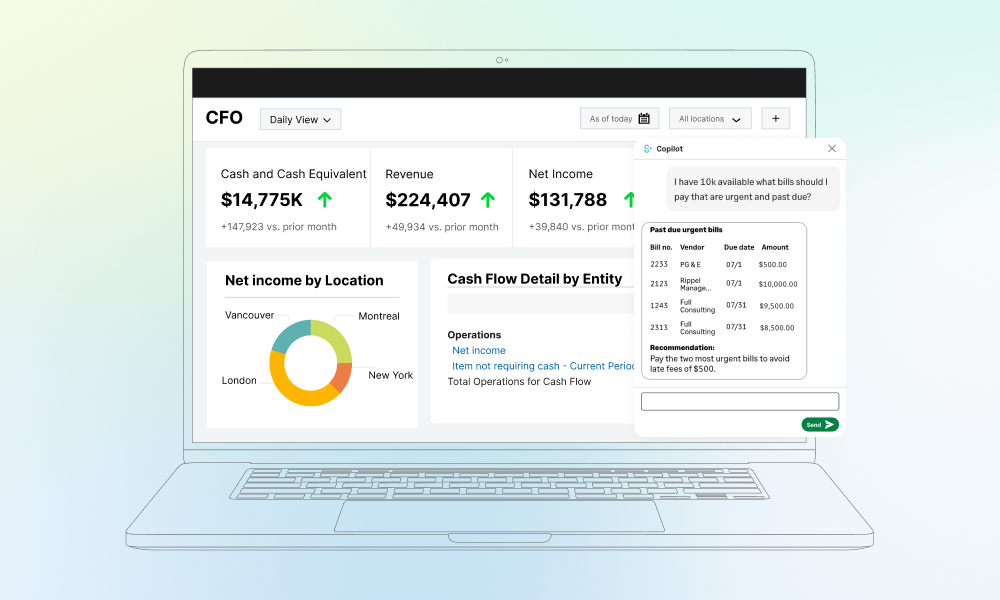
If your goal is to master accounting and financial reporting,Sage Intacctis worth considering. This financial management software helps teams handle essential tasks such as tracking accounts receivable and payable, creating budgets, reports, and cash flow forecasts.
What impressed me most were Sage Intacct’s dashboards and reporting tools, which allow you to track key indicators in real time. This gives teams better visibility into financial data trends and simplifies the creation of customized reports for deeper analysis. You also benefit from practical features such as supplier management and customizable invoices that can be easily adjusted to match your brand or other requirements.
That said, there are a few drawbacks. While the interface is easy to customize, it feels somewhat outdated. Setting up permissions for new team members can be a headache. Some tasks take longer than expected, so teams need to be prepared to work extra hours.
Mon verdict
Sage Intacct is a solid option for small and medium-sized businesses that want more powerful accounting and reporting features. However, if you’re looking for a more modern interface or more intuitive workflows, you might want to consider other solutions.
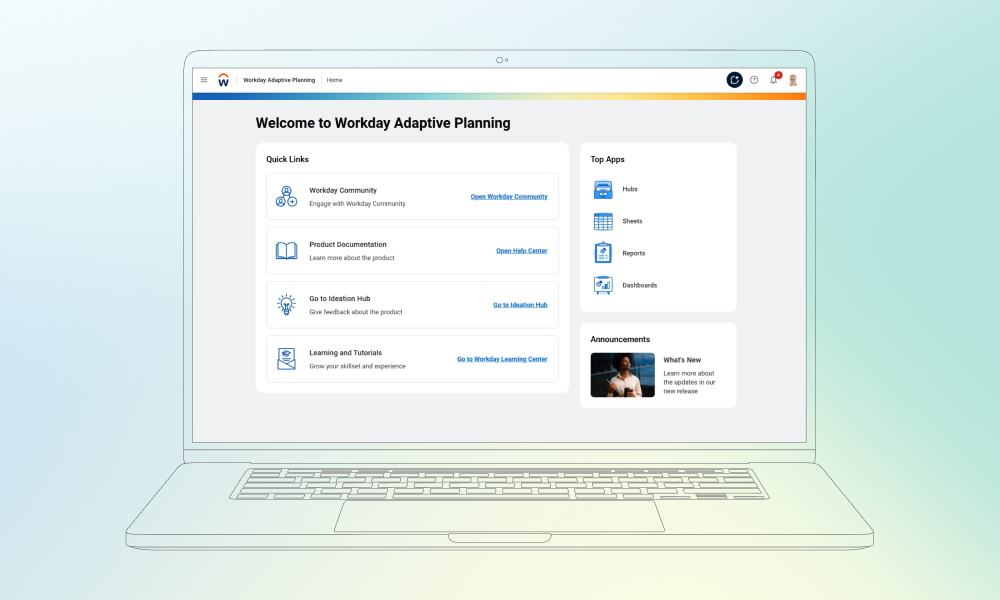
Workday Adaptive Planning
If your team needs a platform for budgeting, forecasting, and reporting all in one place,Workday Adaptive Planningis definitely worth considering. It automates financial processes, supports real-time collaboration, and gives teams visibility into updates as they happen.
I appreciated how it brings together finance, human resources, sales, and operations: you can run rolling forecasts, test scenarios, and align workforce planning without switching between spreadsheets. It also integrates with ERP, CRM, and Salesforce automation systems, allowing you to centralize everything on a single platform.
The drawbacks? Some formulas and calculations can be complex, so you might need help from users who are familiar with the system. Furthermore, Excel’s functionality is more limited than working directly within spreadsheets.
Mon verdict
Workday Adaptive Planning helps keep teams aligned without slowing anyone down. You can test simulation scenarios, track rolling forecasts, and see changes in real time, making planning more flexible and easier to manage. However, smaller teams or heavy Excel users might prefer a different solution.
Final thoughts
As you can see, most of the financial analysis tools I’ve described today offer fairly similar functionalities, such as forecasting, reporting, and data analysis. However, the real differences lie in the details: pricing models, implementation complexity, integration options, and how well each tool fits with the team’s specific workflows. These factors can significantly impact results if software is chosen without a clear understanding of the business needs.